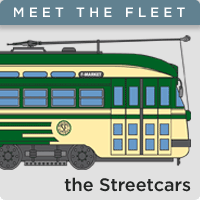
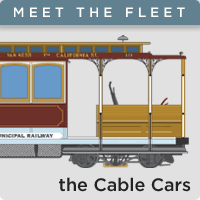
Of all the cities in the world, only San Francisco offers the opportunity to see such a variety of stunning vistas, historic sights, diverse neighborhoods and popular attractions from two different types of vintage rail transit vehicles.
San Francisco’s historic streetcars (sometimes called trolleys or trams) and the world-famous cable cars form a “steel triangle” of rails that bring riders to such destinations as Fisherman’s Wharf, Union Square, the Castro district, Chinatown, Nob Hill, Jackson Square, North Beach, Telegraph Hill, and Coit Tower.
These “museums in motion” are the real deal: not replicas or rubber-tired imitations, but vintage vehicles that operate every day as part of San Francisco’s public transportation system, the Municipal Railway (Muni).
Both streetcars and cable cars were invented in the 19th century, both run on steel rails, and both are fun to ride. But there are significant differences between the two.
If you already know the differences, you can go directly to view San Francisco’s
historic streetcar fleet and cable car fleet.
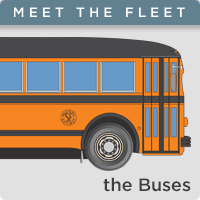
Muni also has several vintage buses, representing much of its rubber-tire history as far back as 1938. These are all San Francisco buses, some of which Market Street Railway brought back from private owners. Muni’s vintage buses appear only on special occasions, and include motor coaches beautifully restored by Muni’s maintenance team as well as trolley coaches. Here’s the link to the vintage bus fleet.
To learn more about San Francisco’s transit pride and joy, explore the links below.
General Information
- San Francisco historic rail transit routes
- Rider information
- Frequently asked questions
- Streetcar, cable car: what’s the difference?
- History spotlight: San Francisco transit stories and videos
Historic Streetcars
- History of San Francisco’s streetcars and the F-line and E-line
- Historic streetcar fleet: images and descriptions of each streetcar
- Current historic streetcar roster with operational status of each car
- Streetcars on the F-line and E-line right now!
- F-line route description & sights
- Charter your own historic streetcar
- SF Travel’s guide to sights and eats along the F-line