The San Francisco Railway Museum features both permanent and special exhibits that entertain and inform visitors about how streetcars and cable cars built the unique city we know today.
Current Exhibits
Take Me Out!
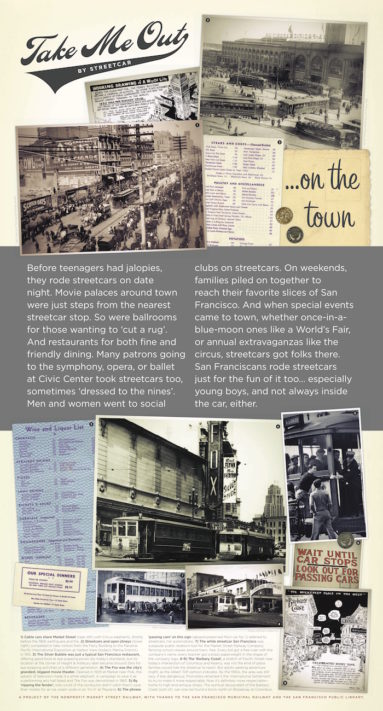 Despite the global fame of the cable cars, San Francisco transit was dominated by streetcars in the first half of the 20th century. People rode them everywhere: to work, to shop, to play, to pray.
Through rare archival photos and motion picture footage and interviews with San Franciscans who remember when their family car was a streetcar, we bring you a glimpse of the San Francisco that was: a Streetcar City!
Streetcars to Buses: How Rail Became Rubber in San Francisco 1917-2017
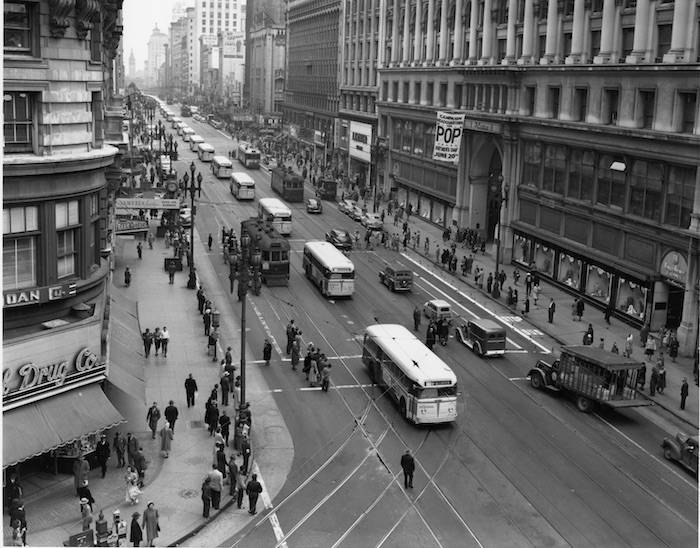 Buses are everywhere today. Public transit, private shuttles, tourist movers. San Francisco got its first public transit buses in 1917. This is the story of how they supplanted streetcars as the most common form of mass transit in the city.